
Energy
Energy powers civilization. Developing technologies that can deliver abundant, sustainable energy is the challenge of our time and the promise of our future. Failure is not an option.
Featured

“Stopping climate change” is the wrong goal
Anything that matters to humans should be under our control. The climate matters—so we should control the climate.

What is The Great Progression: 2025 to 2050?
We have a historic opportunity to harness AI and other transformative technologies in order to make a much better world in the next 25 years.

These red-hot “green jobs” could help Gen Z cope with its eco-anxiety
“Green” jobs that help combat the climate crisis are on the rise, according to the World Economic Forum’s Future of Jobs 2025 report.
More

The grid isn’t ready for 300 million EVs by 2030. Here’s how to fix it.
There were 16.5 million electric vehicles on the world’s roads in 2020 – this is expected to rise to 300 million by 2030.

Nature-based solutions are cleaning up cities
Nature-based solutions can be radical — think covering a highway with a park — but offer meaningful ways to address pollution.

Alternative funeral options are changing how we honor our dead
A small, yet growing number of people are starting to choose funeral options outside traditional burial or cremation.

This $11,000 microcar ships flat like IKEA furniture
Swedish mobility startup Luvly has unveiled an ultra-efficient $11,000 microcar, Luvly O, for urban transportation.

In the turbulent Drake Passage, scientists find a rare window where carbon sinks quickly into the deep ocean
The Drake Passage is one of the most turbulent ocean regions on Earth, but exploring it could help scientists understand how carbon sinks.

Lab-grown meat is about to get fatty
Tufts University has unveiled a new technique for producing lab-grown fat that could improve the taste and texture of cultured meat.

Scientists want to dump iron nanoparticles into the oceans to save the planet
Engineered nanoparticles could make ocean fertilization a viable weapon in the battle against climate change.
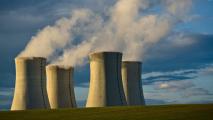
Shutting down nuclear power could increase air pollution
If nuclear reactors are retired, polluting energy sources that fill the gap could cause more than 5,000 premature deaths.

New battery tech boosts EV range by 20%
A new silicon anode material for EV batteries can boost a vehicle’s range by 20% while cutting down on charging times.

Why Earth is the only planet with plate tectonics
Here in our Solar System, of all the known planets, only Earth — not Mercury, not Venus, and not Mars — possesses plate tectonics.

New lithium recycling method is cleaner and cheaper
A cheaper, cleaner lithium recycling method could help ensure we have enough of the valuable metal to power the clean energy future.

Colorful film keeps houses and cars up to 20 F colder than the air
A colorful passive cooling film could help keep homes and cars cool without environmentally destructive air conditioning.

Meatball made from woolly mammoth unveiled in the Netherlands
An Australian cultured meat startup has “resurrected” the woolly mammoth in the hope that people will think about eating it.

Detailed images from space offer clearer picture of drought effects on plants
Researchers are using remote sensing observations to build high-resolution systems to monitor drought from space.

New material traps CO2 — and turns it into baking soda
A new material for direct air capture systems turns trapped carbon into baking soda when introduced to seawater.

The ocean “twilight zone” could store vast amounts of carbon captured from the atmosphere
There may be ways to enhance natural processes so the ocean pulls more carbon out of the atmosphere to help slow climate change.

“Zombie virus” revived after 48,500 years in permafrost
A newly discovered “zombie virus” was still able to infect hosts more than 48,500 years after it was trapped in Siberian permafrost.

Self-sufficient “microgrids” could save you from power grid emergencies
Centralized power systems rely on large power plants and transmission grids, but microgrids are self-sufficient.

Batteries not included: How your own body could power wearables
Batteries are the weak link for wearable and implantable devices. But what if you could harvest energy from the heat, sweat or vibrations of the wearer?

How to pull carbon dioxide out of seawater
Researchers have found an effective new method for removing carbon dioxide from salt water in the ocean.
Subscribe to the newsletter