
Face masks made from… LEGO?
The popular toy company that’s mass-producing PPE, how to fight the coronavirus from your computer, and more top stories in our weekly Progress Report.

Can a robot really freestyle?
Engineers at the Georgia Institute of Technology have designed the first robot capable of not only playing music, but creating it.

Series|
Catalysts
Staying sober in quarantine
Isolation can be especially difficult for recovering addicts, so this sober active community is hosting virtual fitness classes for free.

Hong Kong protests in Animal Crossing
Hong Kong’s virtual protests, tech giants joining forces to slow the spread of COVID-19, and more top stories in our weekly Progress Report.

Hackers leak thousands of coronavirus research papers
Potentially life-saving medical research is often hidden behind expensive paywalls, limiting access for those in the developing world. So one modern-day Robin Hood illegally downloaded and shared over 5,000 coronavirus research papers on Reddit.
Ventilators, vaccines, and drag queens
We believe the news doesn’t have to be depressing. In fact, it should inspire people to build a better world. Watch the first episode of our new series, Progress Report.

Series|
Catalysts
Learning to code in prison
This progressive organization is on a mission to break the cycle of recidivism, using coding. Incarcerated individuals can now spend their sentences acquiring marketable skills.

The formerly incarcerated fighting for criminal justice reform
These formerly incarcerated individuals are fighting to give people who’ve served their time a second chance by advocating for change in one of the country’s most notorious justice systems.
The key to good teamwork
The coronavirus pandemic is forcing more teams to figure out how to collaborate while working from home. This team-building tool helps people with different communication styles get on the same page.

Series|
Catalysts
Open source textbooks save students $1 billion
Many college students’ ability to realize their full potential is hampered by insurmountable expenses, so OpenStax is turning the tide by providing access to free textbooks.

Red Bull’s underground pitch competition for young innovators
Red Bull’s pitch competition allows colleges around the world to tap into the limitless potential of young, creative minds to develop new technology for the greater good.

Should we turn chickens into dinosaurs?
These scientists are studying chickens to learn more about dinosaur DNA, and their findings could help us better understand our own genetic code.

Series|
Catalysts
3D printed homes for the homeless
This 51-acre neighborhood for the homeless will be the first of its kind in the U.S. to have 3D printed homes.
Series|
Dope Science
I use ketamine for depression – here’s how it works
Commonly known as a party drug, ketamine’s powerful effects on the brain have led doctors to further explore its medical potential. Now, the animal anesthetic is providing relief and hope for people with severe depression.

The power of sketching in visual communication
Michael DiTullo, designer for Nike, Honda, and Hasbro to name a few, shares the value of drawing as a means of communicating ideas.

Why do selfies matter? Ask Frederick Douglass
The great abolitionist, freedom fighter and orator, Frederick Douglass, used photography to smash racial stereotypes and reframe Black identity.
Series|
Biohackers
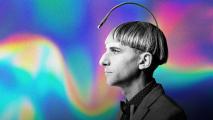
The cyborg artist who hears color
Neil Harbisson was born colorblind. Now he has an antenna implant in his skill to hear color and create beautiful works of art.

Series|
Biohackers
I got a chip implanted in a biohacking garage
Hacker surgeons like Jeffrey Tibbetts implant everything from compasses to wireless routers. Freethink’s own Chase Pipkin decided to try it out.

Series|
Guardians of the Apocalypse
Geoengineering: Our last defense against climate change
Reflecting the sun’s rays is a proposed last-ditch effort to mitigate the effects of global warming. This Harvard research team is trying to better understand the potential risks in order to save the planet.

Robot artist challenges our definition of art
Artists have a history of subverting expectations and mainstream culture, but the world’s first humanoid robot artist is taking it to a new level. So far, she has sold over $1 million worth of art.