
Biotech
Human history has been all but defined by death and disease, plague and pandemic. Advancements in 20th century medicine changed all of that. Now advancements in 21st century medicine promise to go even further. Could we bring about an end to disease? Reverse aging? Give hearing to the deaf and sight to the blind? The answer may be yes. And soon.
Featured

The next era of psychedelics may be precision-designed states of consciousness
A look inside Mindstate Design Labs’ effort to design drugs that reliably produce specific states of consciousness.

What is The Great Progression: 2025 to 2050?
We have a historic opportunity to harness AI and other transformative technologies in order to make a much better world in the next 25 years.

Progress happens because solutions create new problems to solve
Solutionism means fully accepting what’s in front of us and enthusiastically stepping up to meet the challenge.
Psychedelics & Mental Health

How to reclaim meaning in a changing world
What if the barrier to a fulfilled life isn’t technology, it’s culture?

The exciting research that may cure Parkinson’s
GeneCode is developing a drug it hopes won’t just alleviate Parkinson’s symptoms but also protect and restore patient’s neural health.
Biohacking

We’re able to create new creatures through gene editing. What’s stopping us?
The question isn’t whether we can sculpt new life. The question is what comes next.

Boosted Breeding and beyond: 3 tech trends that could end world hunger
A world without hunger is possible, and the development and deployment of new farming technologies could be one key to manifesting it.
New AI generates CRISPR proteins unlike any seen in nature
An AI that generates CRISPR proteins is opening the door to gene editors with capabilities beyond what we’ve found in nature.

Ray Kurzweil explains how AI makes radical life extension possible
Life expectancy gains in developed countries have slowed in recent decades, but AI may be poised to transform medicine as we know it.
Vaccines

Personalized cancer vaccines are having a moment
Personalized cancer vaccines were a recurring theme at the annual meeting of the American Association for Cancer Research in 2024.

The threat of avian flu — and what we can do to stop it
Avian flu is infecting cows on US dairy farms, and now a person has caught it — but new research could help us avoid a bird flu pandemic.

One shot recreates younger immune systems, in mice
An antibody treatment designed to revitalize an aging immune system delivers “surprising” results in elderly mice.
More

AI can detect coronavirus infections far faster than humans
New artificial intelligence systems can detect coronavirus infections far faster than human doctors and could help end the COVID-19 outbreak.

Should we turn chickens into dinosaurs?
These scientists are studying chickens to learn more about dinosaur DNA, and their findings could help us better understand our own genetic code.

US’s first drive-thru coronavirus clinic opens in Seattle
A Seattle hospital system has opened a drive-thru coronavirus clinic, a place where people can be tested for COVID-19 without leaving their cars.

This adjustable heart valve would grow as a child ages
A new, prototype artificial heart valve can adjust to a child’s growing body, potentially sparing them from multiple open-heart surgeries before adulthood.

Safe injection sites are legal, US court rules
A U.S. judge has ruled that safe injection sites, places where users can consume drugs under medical supervision, don’t violate federal drug laws.

Algorithm clears thousands of marijuana convictions in just one minute
With this new system that identifies candidates for criminal record clearance and even auto-fills forms, offenders don’t even need to apply.

“Electronic nose” can detect a cancer precursor on patients’ breath
A new study found that an electronic nose could be an improved screening tool for Barrett’s esophagus, a precursor to esophageal cancer.

Building an artificially intelligent, open-source prosthetic leg
We’ve come a long way since the first prosthetic leg, and “smart” limbs, equipped with computing capabilities and…

Why aren’t the World Bank’s pandemic bonds helping fight COVID-19?
The World Bank sold pandemic bonds to address global health emergencies, but it has yet to release any of the money to help fight the COVID-19 outbreak.

Data scientists are making it easier to track COVID-19
Teams of computer scientists across the globe are working tirelessly to help track COVID-19 through the use of computer modeling and data dissemination.

Can an algorithm predict the next disease outbreak?
Researchers are using this algorithm to predict which regions are likely to see a zoonotic disease outbreak, and hopefully prevent the next global pandemic.

AI helps scientists discover powerful new antibiotic
Using a computer model powered by artificial intelligence, researchers at MIT have identified several promising candidates for powerful new antibiotics.
Series|
Dope Science
I use ketamine for depression – here’s how it works
Commonly known as a party drug, ketamine’s powerful effects on the brain have led doctors to further explore its medical potential. Now, the animal anesthetic is providing relief and hope for people with severe depression.

New lasers see into the brain to detect concussions
Researchers are attempting to improve the age-old concussion test with a device that can measure CCO levels in the brain using infrared lasers.

$100 genome sequencing has finally arrived
China-based genome sequencing company MGI says it can sequence a human genome for just $100, a cost that could make the service available to all.

Intro to LSD
LSD, also known as acid, is a synthetic chemical that causes hallucinations, synesthesia, and sometimes, distress – the dreaded “bad trip.”
Series|
Biohackers
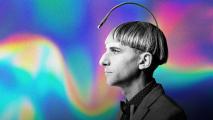
The cyborg artist who hears color
Neil Harbisson was born colorblind. Now he has an antenna implant in his skill to hear color and create beautiful works of art.

Run faster, think better: Hugh Herr on the future of bionics
Hugh Herr, head of Biomechatronics research at MIT and hailed as a bionic pioneer, is working to close the gap between synthetic limbs and the brain.

Cancer survivor gives birth thanks to a new fertility procedure
A French cancer survivor is the first person to give birth via a fertility treatment that involves freezing and thawing eggs that underwent in vitro maturation.

New PTSD therapy dulls the sting of painful memories
A Canadian researcher’s reconsolidation therapy is helping people overcome PTSD by allowing them to edit painful memories to be less emotionally impactful.
Special Collection

Collection
The Science of Death
Explore the journey from life to death and beyond. Near-death experiences, death doulas, digital immortality, and more – join us for a thoughtful exploration of one life’s most intriguing and inevitable phenomena with stories from the frontlines of death.
Subscribe to the newsletter